FoodWorks Turns 15, Graduates 50th Class in Halethorpe

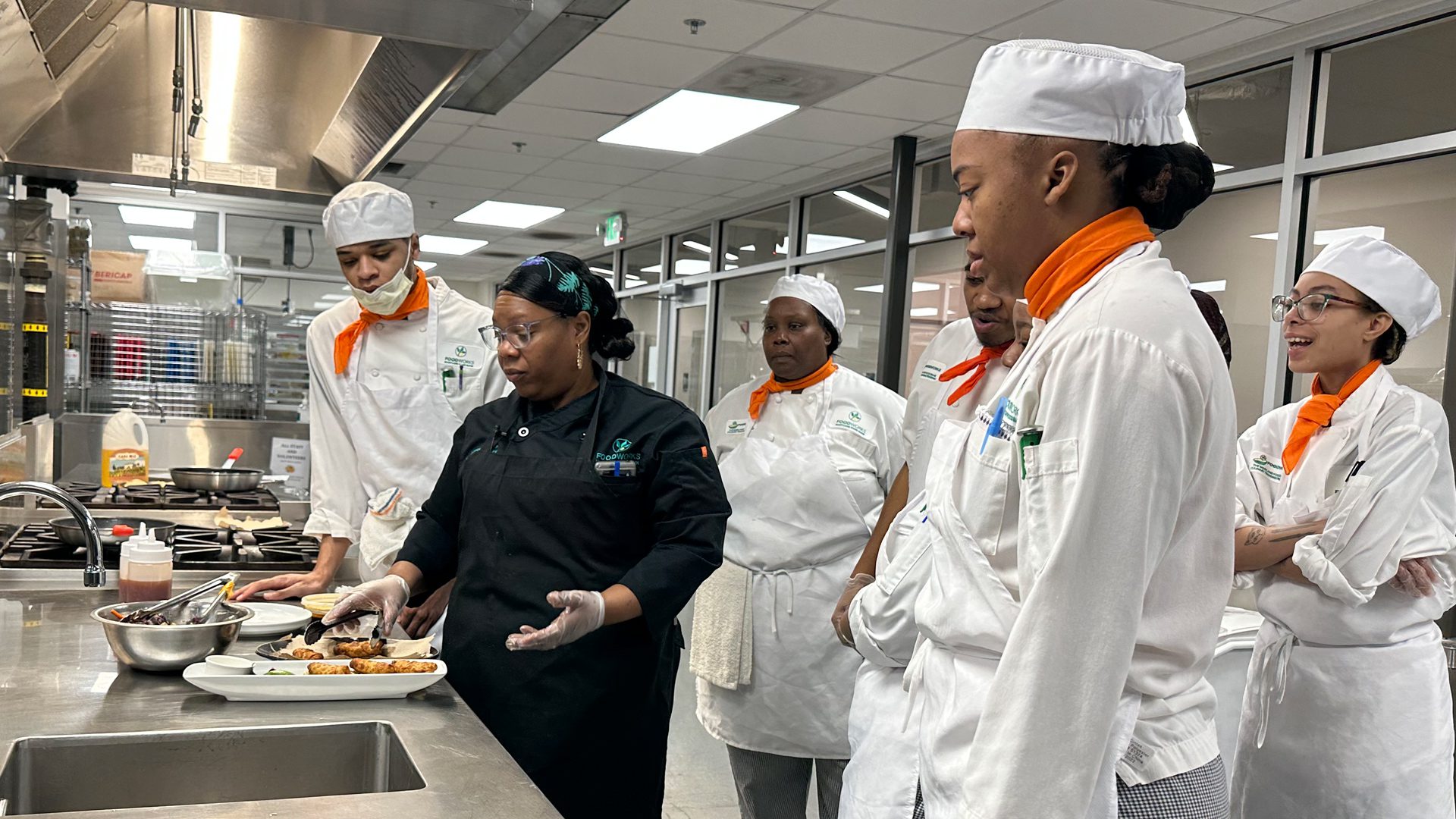
15 years. Over 50 Classes. More Than 500 Lives Changed. One Powerful Program.
Since we launched FoodWorks in 2010, the program has evolved into Maryland’s premier no-cost culinary training school—offering Marylanders the chance to change the course of their lives in just 12 weeks through an intensive training program.
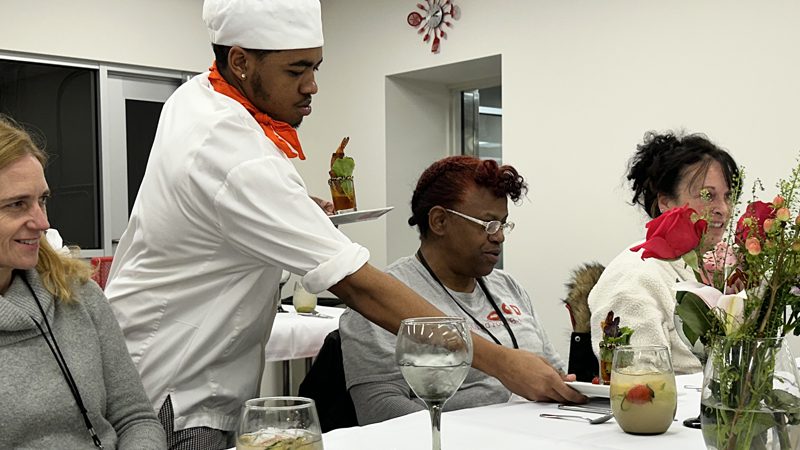
While there are a number of quality culinary training programs in Maryland, none offer the unique combination of life and knife skill development, certification, and long-term career support that FoodWorks provides to graduates—some of which work in some of the most prestigious establishments in Maryland.
Other graduates, like FoodWorks Halethorpe Class 40 Graduate Bria Evans, is paying it forward. Bria is the current Director of Operations and Head Chef for the Requity Foundation, helping transform 11th and 12th graders from Carver Vocational-Technical High School into the next generation of culinary artists. Bria also runs a nonprofit that offers hot meals and showers to neighbors in need.
She credits much of her success to the support of her FoodWorks case manager. “I appreciate Dani, because I’m not sure this would be without her,” she said.
But this focus on student support does not just happen—it is the result of meticulous planning, thoughtfulness, and consistent execution by a passionate leadership team.
Truly Unique, Chef Monique Jordan Takes FoodWorks to the Next Level
Six years ago, Chef Monique “Moe” Jordan felt frustrated by the local culinary industry and was looking for a different experience—one where the level of integrity at the organization matched her own high standards. Thankfully, she found that the Maryland Food Bank could provide that opportunity through FoodWorks and was named Executive Chef and Director of Culinary Arts on December 19, 2019.
“I wanted to go somewhere where I could utilize the skills I had developed and meet the students where they are, because at one point, I sat in their seat, and know exactly how that feels.”
When Chef Moe first came to the Maryland Food Bank, she chose to spend time observing the way the program ran. “I didn’t want to come and just change things around—I wanted to make sure any decision made were meaningful, student-oriented, and most importantly, transparent, to maintain that integrity,” she shared.
After watching, and listening, Chef Moe redefined FoodWorks’ curriculum to make sure that the students were learning specific techniques, fundamentals, and skills that would prepare students for more than just a job. Instead, she wanted to ensure the program would give them the kind of experience that sets graduates up for a good-paying, long-term culinary career. But that was not enough to satisfy Chef Moe’s appetite for a fully functioning program.
FoodWorks Evolves, Supports Students’ Success
“I remember the challenges of being a student—I know how it feels to try to balance classes with family responsibilities. Just like students today, I didn’t have a lot of support or resources to help get me to where I am now, so I want to provide that for people,” she shared.
Under her guidance, FoodWorks students are experiencing fewer challenges along their journeys, including one of the most common barriers—transportation.
“Due to the incredible support of our donors, we’ve been fortunate to bring a lot of new resources in for students—maybe the most important being transportation. Between a dedicated van, and the ability to hand out bus or gas cards, that means students have one less thing to worry about and can focus on the curriculum,” said Jordan.
In addition to transportation support, FoodWorks students receive a weekly stipend to help manage their budgets, weekly food supplies to both practice technique and round out their household shopping, hygiene and personal products, and even clothing, computers, and kitchen gear!
But it’s not just students in Central Maryland that have the opportunity to change their lives through FoodWorks. In 2022, the Maryland Food Bank began a partnership with Wor-Wic Community College in Salisbury. Since the second campus’ launch, more than 100 students have graduated as professional chefs, and work in places like Saltwater 75, the Ashore Resort and Beach Club, Ocean Downs, and many other respected locations.
FoodWorks, Halethorpe Class 50 Has the Recipe for Success
In late September 2025, the 14 students in FoodWorks’ Halethorpe Class 50 who began the 12 intensive week program as students will graduate as Chefs and experience the on-going wraparound support of FoodWorks passionate staff, ensuring their success in the culinary world.
Congratulations to FoodWorks’ Newest Chefs
Suzette Kenya Morales Rutherford, K’wuan Deandre Colbert, Takeya L. Hawkins, Raquan A. Muldrow, Michelle Parker, Timothy Smith, Gregory W. Cheek Jr., Darius E. Bourne, Davayon Golder, Eva Mackey, Joshua L. Johnson Sr., Christopher Daurora, Walter L. McDowney, and Shon Felder – we can’t wait to see what you create!
How Does FoodWorks Work?
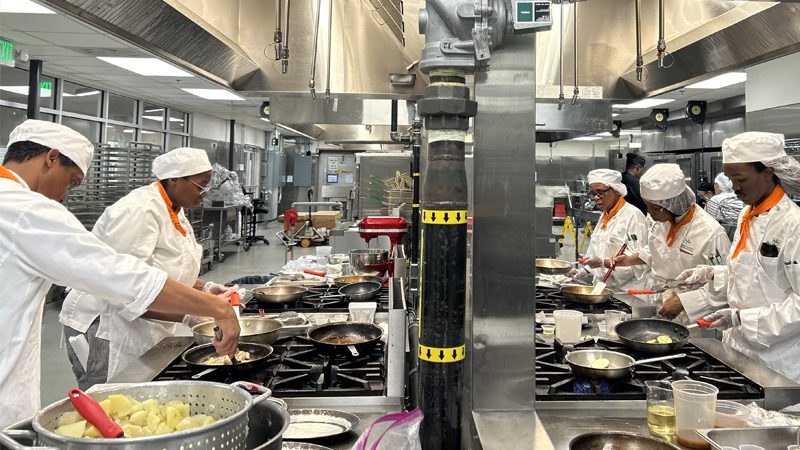
Over the course of 12 weeks, students learn everything from the most basic knife-handling techniques, to how to manage a team capable of planning and executing a full-on culinary experience.
During the first month, students become familiar with the tools of the trade, learn about the equipment they will be using, the basics of baking and sauce making, how to identify fresh herbs and spices in our Education Garden, and the all-important food safety skills that earn them a Food Handler Certificate (a pre-requisite to working in the kitchen).
In the middle portion, students build on the basics—working on various cooking techniques so they are capable of cooking soups, mother sauces, and stocks; working with pastas, legumes, and grains; as well as fabricating meats, poultry, and seafood.
The final four weeks see students refining and fine-tuning their culinary prowess by learning more intensive ways to prepare proteins; exploring more advanced baking techniques; and learning about Front of House (or non-kitchen area) management techniques. Students also earn their ServSafe certifications in Food Safety and Advanced Food Handling Techniques—credentials that separate FoodWorks graduates from the competition.
Post graduation is when things really start cooking in FoodWorks. It’s simply not enough to reduce entry and participation barriers, intensively train in both culinary and interpersonal skills, and send graduates out into the culinary world.
Chef Moe and her team have been there. They know how hard it can be to get started in the industry and want to give graduates every opportunity to succeed, just like they did when students were in the program. FoodWorks graduates enjoy goal setting, resume-building, workplace professionalism, job searching, interviewing techniques, and even ongoing financial and digital literacy support. How graduates combine those ingredients and create their own career paths is only limited by their imagination.
The power of FoodWorks is only limited by capacity. When we opened the second FoodWorks campus in Salisbury, it meant our neighbors on the Eastern Shore had more opportunities, and more hope. When we expanded and renovated the Maryland Food Bank’s headquarters in Halethorpe, it meant more Baltimore-area budding chefs had a chance. Help us help more neighbors build their own pathways out of hunger by making sure FoodWorks for more Marylanders. 

About The Author
Ben Gross
For more than 30 years, Ben has been helping organizations raise awareness and inspire action by creating compelling narratives. And since 2018, Ben has been the Maryland Food Bank's Staff Writer, elevating the voices of food-insecure neighbors to further the Maryland Food Bank's mission of feeding people, strengthening communities, and ending hunger for more Marylanders.
Get updates on our progress in the fight against hunger
Want to see how your involvement directly impacts the well-being of your neighbors in need? Get the latest news sent to your inbox.